The First attack , July 1650
The General , Don Diego de Villalva y Toledo limped towards the bow of the ship so he could get a better look at the green slither of the Island of Ruatan as it began to appear on the horizon as they approached from the southwest , Havana ( their home port ) over 174 leagues to their North , Santo Tomas de Castillo ( where they had been supplied and regrouped with the Honduran Flotilla ) 53 leagues behind them westward ; four ships , 300 men with a handful of lanchas and chalupas in tow for the landings. An experienced , battle-hardened artilleryman with much experience well connected to the Royal Court off Phillip IV , he didn’t anticipate that the mopping up of the group of ragtag Buccaneers and Indians would present much difficulty. He had commanded troops at the Battle of Lleida , 8 years earlier , part of an army of 20,000 under the Marquis Leganes but the smaller French force had the higher ground and the Spaniards were forced to retreat not after which General de Villalba took shrapnel to his legs causing him serious loss of blood and excruciating pain. He had been the Governor of Cuba since 1647 and when the request for assistance came from the Capitania General de Goathemala , Juan de Veraza and the Bishop of Comayagua , Father Luis de Canizares , the General didn’t hesitate to take up the baton of military leadership and the chance to smell gunpowder , hear the blast of the arquebus and the boom of the canon once more. The prospect of a military victory away from Cuba in the name of the Crown had filled him with excitement. A year prior , he had overseen an outbreak of yellow fever in Havana and it was exhilarating for him to be back on the sea with the chance of a fight once more.
The few remaining English of the Claiborne Settlement had joined forces with Buccaneers ( turned logwood cutters ) and the remaining Indian families from the Roatá village and had not only denied sustenance to the Spanish in Trujillo as they had done prior to 1639 but were now serving as a victualling station for the English supplying them corn , cassava , fish and turtle even a cooperage had been established. Several raids had been made on Spanish shipping and mainland settlements. Juan de Veraza , based at the Fort of San Felipe de Lara on the Rio Dulce , was concerned that he would be next to be attacked. The Bishop of Comayagua was concerned that converted Indians would be lost to the pernicious heretics [ English Buccaneers ]. The appeals were heard and orders began to flow ;The Royal Guatemalan chronicler of the times , Francisco Antonio de Fuentes y Guzman ( the younger ) documented the following :
“ Don Antonio de Lara Mogrobejo, as Captain General, orders Captain Don Francisco de Fuentes y Guzmán, my father, to provide the navy of Havana under the charge of General Don Francisco de Villalva y Toledo, and the ships of the Honduran flotilla, that were in the Port of Amatique, and Golfo Dulce of sixty jugs of gunpowder, bullets, and rope, and muskets, and arquebuses of the Royal Hall of Arms, and a warehouse of gunpowder, which was in his care as Captain guard of them, delivering them by the resolution of the council of war, to Admiral Elias de Bulasia, that he was the captain of the flotilla in the port of Santo Thomas de Castile, for this faction that we refer to, and for which he was also appointed as Captain of fifty infantry, who rose up in the Corregimientos [ local militias ]of Chiquimula, and Cazabastlán, Captain Juan Bautista de Chavarría, whose separate dispatch is to arm this company of muskets, flasks, candles, rope, and gunpowder, and bullets, and all of them of the dates of February 21, March 3, 4, 11, and 26, May 6, and July 21, 1650, countersigned by Juan Martínez de Ferrera, Notary of the Chamber, and Government and War, which give us light on much derivation of news, of this important and precise expedition of Ruatan, which without it we could not yet circumstantiate it in such a way as the archives were denied to our just zeal.”
It was after midnight with Huitla [Utila] to their starboard bow as they approached the western tip of the Island . Using charts drawn up in 1620 by the Portuguese cartographer Manuel de Figuereido , the four vessels made their way slowly eastward up the south side of the Island towards the channel that was adjacent to the enemies location. For safety sake they remained a half a league from shore and they could make out two or three small fires on the island that glistened like distant stars. The soldiers below decks who had slept restlessly in their hammocks during the night were now readying themselves , their armour and weapons. The sailors and officers had been abovedeck since the early hours to keep an eye on the approach. As dawn approached and a sliver of the sun’s fire peeked over the horizon those who were on deck marvelled at the greenness of the island as they approached the narrow channel .The corporals barked commands at the troops to get prepared which was followed by a clatter and clink of muskets , swords , armour and helmets. Drifting through the narrow channel every man was on deck making last minute adjustments , they could see smoke rising from the Indian village to the north at Roatá as fires cooked the morning meal. A sounding was taken and the order to drop anchor was given by the General on his flagship right in the middle of the harbour a few fathoms north of a small shoal.
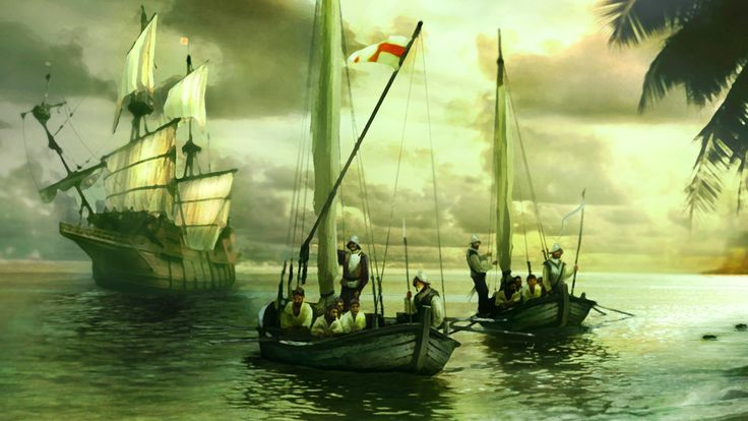
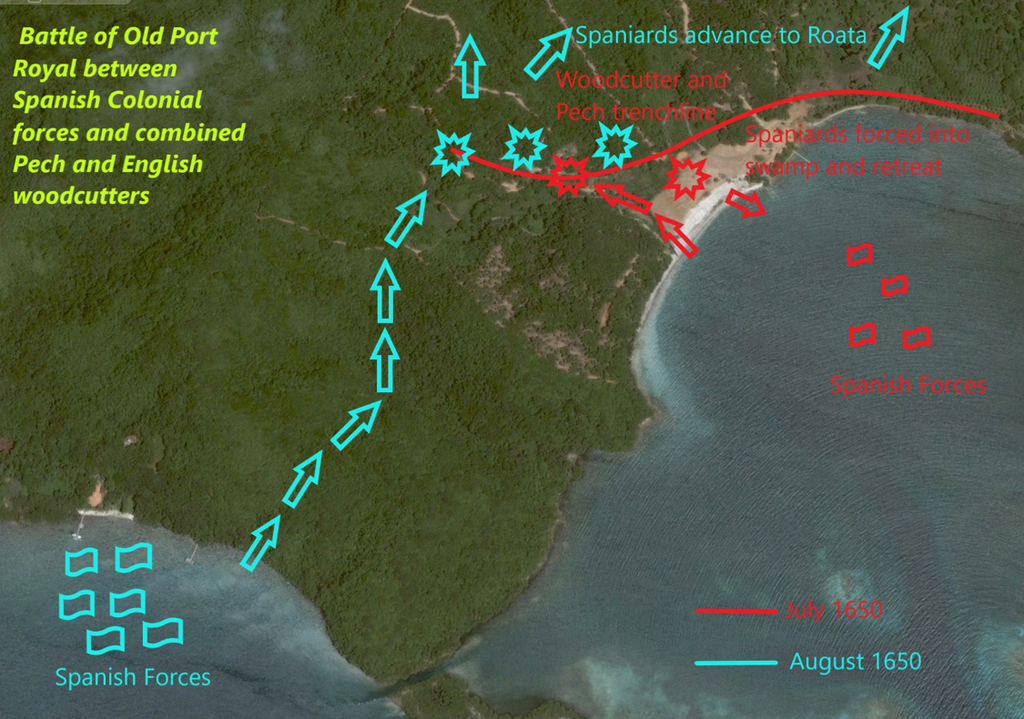
While the anchor was setting , to larboard the General could make out a sight that gave him an uneasiness in his gut and caused him , for albeit a brief second , to recall the debacle at Lleida where the French had the higher ground and won the day and he received the wound that gave him his limp. This day , here on Roatan in mid July 1650 it was the rag-tag army of English , Dutch and French buccaneers , logwood cutters and Paia Indians who were laying in wait in a single , well dug trench about 50 feet up that traversed a red hill for about 600ft with a commanding view of the whole harbour. The English muskets and arquebuses pointed outwards towards the four Spanish vessels , their sworded hips glinting in the rising sun as the enemy positioned in the trench waiting with racing hearts for the Spaniards to make their first move. The Spaniards from their vessels could see unmistakably darker skinned and shorter men scurrying between the soldiers in the trench distributing what must have been gunshot and powder. These were the Paia Indians who had chosen one oppressor over another and sided with the English and now helped them in the defense of their home , Roatá.
“………for the English had prepared his guards, with a long and very strong trench, which extended, closing the passage in a prolonged manner in this port (to which our armada had contributed) from the one point of land, to the other of those that open, and give formation to the inlet, and although this by its extension, and a long line was difficult to cover and crown, but having on the western side the bait, and flow of a small estuary that with the swelling of the sea it swollen, and dampened spilling over the whole place leaving it converted into a great and vorous swamp, which made it defended by itself, for any assault; so that the rest of the trench, the upperer, and leaner part, became more capable of opposition, and of defense, and more for its own safety”
It was apparent that the enemy knew that the small fleet was coming ( surely a lookout on a hill at Roatá alerted the force ). General Villalva y Toledo’s heart was racing as well , as he surveyed what lay before him and devised a plan which he shared with his subalterns. The saving grace was there were no canons. It would seem that there was a shallow river with heavily wooded banks which ran from the seashore to the left flank of the trench. The plan would be to land at the river mouth in the lanchas and chalupas and under cover of the trees on the river bank still out of range of the enemy’s rifles , and proceed up both banks until they were within range and then form a line to outflank the trench. As the sailors readied the landing craft the soldiers with much clanking and cacophony boarded the smaller craft to make the short run to the rivermouth . Three hundred irregular colonial soldiers , most with little or no combat experience awaited their fate as the first craft landed at the estuary . As they got close some of the enemy let fly a salvo or two to test their marks and all the Spanish ducked and the English shrieked and howled in delight.
General Villalva stayed on board his vessel and watched the progress of the battle through his eyeglass . Commanding the force was his trusted aide Captain Don Martin de Alvarado y Guzman and Sergeant Nicolas de la Garza. The Spaniards made their noisy way up the river flanked on both banks by thick groves of buttonwood and Logwood ; they were making heavy work of it since the river had overflowed and the right bank had flowed out into a large swamp that spread out over several hundred feet below the red hill where the English enemy were entrenched. As they approached and became visible to the enemy they came under fire and suffered the first injuries.
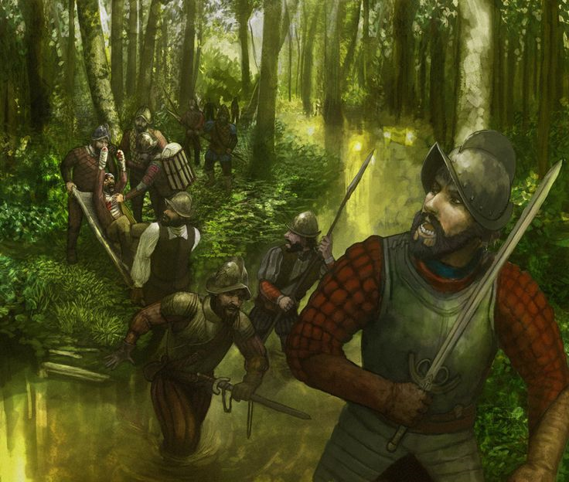
It was heavy going for the Spanish fighting uphill against well entrenched defenders who had the numbers to be able to replenish the trench as English and Indians fell :
“ supplied with the entrenched English; but these stimulated by their own desire to maintain the land acquired, and dominated, no less than ours by honor, and zeal to restore what was lost, made the English people suffer upon themselves a long battle, and battery of our musket shots, which did not fail to do them some harm, some of them wounded, who abandoned the trench, and replacing them others who covered the post, they renewed the combat, which lasted a long time on a firm footing with many charges, and valiant advances of ours, in which some were wounded,….”
At a point around noon having attempted charge after charge and the English fire not having dimished in the slightest , General Villalva went ashore in an effort to spur his soldiers on and noticed an unoccupied section of trench on the left flank to which he ordered thirty men to rush in and attempt to occupy it .
”….but the general, recognizing that the ardor did not diminish, and the number of the entrenched pressed the battery, and the advances until the point of noon, without achieving in our credit a step more than the principles, with which, taking the retreat, and heading for the part of the trench that seemed abandoned, only that diligence served to meet the impediment of the swamp ….”
Needless to say the unoccupied English trench was quickly filled and the Spanish attackers were pushed back into the swamp with a pair of them being shot as they became bogged down and imobilized. Above the Spaniards in the English trench they could hear the groans and cries of English wounded and the hurried chatter in the native tongue of Indians who seemed to mostly have the role of orderlies taking water to the soldiers and tending to the wounds of the injured with poultices of what appeared to be ash and leaves. The Indians indeed had abandoned traditional dress and were using European britches and shirts although none seemed to have a combatant role .By mid-afternoon , sensing a stalemate with casualties mounting , down to the last of their gunpowder and shot , the sun was going down and with the daunting prospect of spending the night in enemy territory , General Villalva took the decision to reboard the four vessels and weigh anchor. The fleet would head to Rio Dulce and the port of Santo Tomas de Castile in the Rio Dulce to lick their wounds re-arm and re-supply.
The Second attack , August 1650
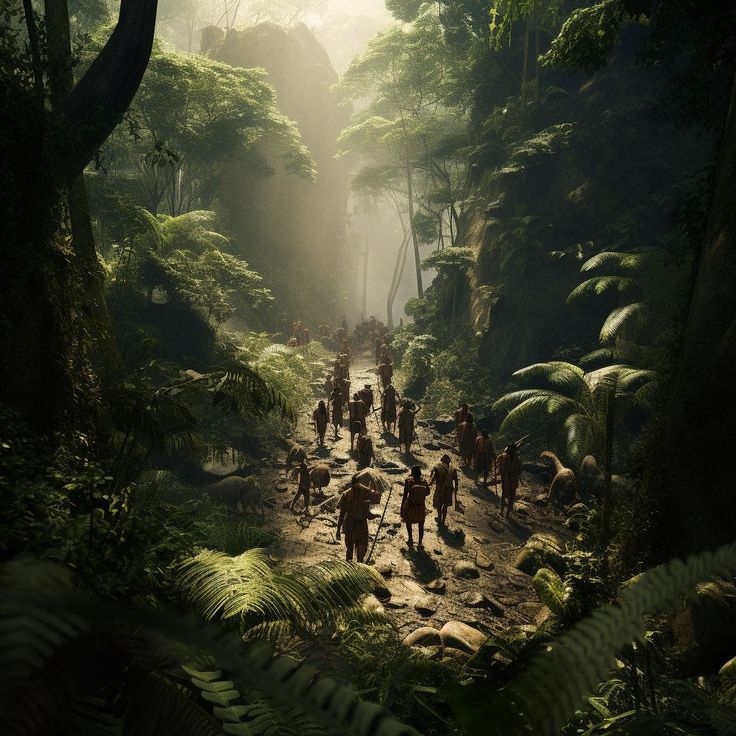
General Villalva’s outlook had changed and he must have had some time to think as he made the overnight passage from Ruatan to Rio Dulce. Reflections on the Battle with the determined and fierce English and their Indian allies. The failed skirmishes up the red hill to the long trench , the vast swamp and his soldiers bogged down in it with fear in their eyes trying to walk out and being sucked in and slaughtered. He recalled the smoke from the Indian village off to the north where he could see women with infant children on their hips observing the battle from a distance. The renowned Indian Village of Roatá which had once supplied the Spanish at Trujillo with corn , cassava , mahangu rope , fish and turtle meat . It was after the weakening of Trujillo as a Spanish colonial town that the Paia had formed an alliance with the Buccaneers and with who they had sustained their settlement and that of their neighbours in Masa [Helene or Helin ] since 1640. The catalyst for this decision to swap loyalties was taken by the Caciques after the last time they were sacked by Diego el Mulatto and Pie de Palo , sadly they had little or no choice and it was a case of ‘better the devil you know’.
Thinking of how he could break through the defenses , General Villalva studied the charts and determined that the only way to outflank the vast trench and the swamp and to arrive undetected was to sail in to the adjacent harbour. He would also need more men , more musketry , powder and shot which would mean more ships. He was used to commanding elite Tercios infantryman , these colonial troops were mainly reservists with little or no infantry training and lacked the edge against the English who apparently had combat experience and had killed men before. Once at the Castile at Santo Tomas , he set in motion his influence convincing his peers of the realm that the English scourge – “since the great audacity and obstinacy of Guillermo Parchero [ Pirate William Jackson ] infested our countries, they wished by their infamy and their pretense to give them a pleasant reception to the English, that they set foot not a few days on the Island of Ruatán, passing eight years of being besieged, and well fortified in it, with many utilities”- and their Indian cohorts represented a grave danger to Spanish and Catholic interests in the area and in short order he was successful :
“The Licentiate Don Antonio de Lara Mogrobejo, of the Council of His Majesty, its most senior auditor in the Audiencia, and Royal Chancery who resides in this City, President of the Chamber, and Captain General in the Provinces of his district, etc. Whereas, in a letter written to me by Don Francisco de Villalva, General of the Navy who came from Havana, he warns me that the greatest necessity for the faction to punish and dislodge the enemy who is fortified in the Isla Ruatan is gunpowder and musket balls, for having expended those he took out of Havana, in the encounter he had with the said enemy, in order to return to the said faction, and in order that it may take effect, I hereby order Captain Don Francisco de Fuentes y Guzmán, in charge of the Hall of Arms, and house of gunpowder, which on behalf of his Majesty is in this City of which he is in charge of, and deliver to Captain Elias de Bulasia, fifteen jugs of gunpowder, and six quintals of bullets, in addition to what he has delivered, that with this dispatch and his letter of payment I order they be received to him, and that they be taken into account when the of what he has delivered. it is his charge. Fho. in Goathemala on the fourth day of the month of March, one thousand six hundred, and fifty years. El Liz. Anto. by Lara Mogrobejo. — By order of his Lordship Juan Martínez de Ferrera.”
In mid-August with two more vessels making a total of six and one hundred and fifty more men making a total of four hundred and fifty , General Villalva y Toledo and his small force made haste returning to Ruatan. The soldiers morale was ebullient and the General himself was confident with his plan and the ample amount of munitions that he carried into battle including two small field cannons. The voyage from Rio Dulce to Ruatan was overnight with an expected arrival at dawn to execute the attack.
Upon arrival at the new landing site “ For, knowing the great difficulty that arose in the advance and taking of the first trench, it seemed to Villalva to try his fortune by the other port, which he had not previously attempted, abandoning the first, and going to disembark there, leaving his armada well prepared and guarded, he jumped ashore with frightful rapidity, and directing his march in good order to the trench on that side ” Advancing by foot through the dense valley the four hundred and fifty men with swords , muskets , powder horns and shot , the ‘battle rattle’ could be heard a ways off and General Villalva was sure that this had given the English ample warning of their left flanking approach in order to make preparations. The force arrived at the beginning of the trench and found it manned but because they were able to attack from the side and on level ground they had an advantage. A helacious battle ensued with intense firing from both sides but the momentum eventually swung in favour of the Spanish when they let fly two blasts of cannon shot at point blank into the trench killing eight English
“.. but two pieces of artillery on our side, having broken through the trench with eight English dead, made the door to our infantry, who, advanced in good order of battle at the opening, entered the trench to great pain, and confusion of the English, who, huddled together, and in bad order, tried to maintain a good space, but the number of Spanish musketry, accompanied by the artillery shots with which some of the enemy were killed, made him make an orderly and long retreat “
The effect of the cannon blast and sight of mangled flesh and the breaking of the trenchline was too much for the English-Indian force and they attempted to retreat to higher ground in two groups while the Spanish were re-forming. The English left the path strewn with items of musketry most likely , according to Fuentes y Guzman’s father to delay them while they inspected the items and picked them up.
“ at the same time that the English trying to divide into two squadrons, catching our advance disorderly, in an instant it was broken, and scattered over the field with many dead, and the most wounded of those who escaped, of the Spanish squadrons that followed them, but not so lightly, and loosely as the English in flight, because taking cover of the mountain in a short time they disappeared from our sight, leaving in the field the spoils of some weapons, and [ military clothing and satchels ], not a little industry, and military ruse to stop our men from collecting them, and loading them “
General Villalva and his men , although having won the battle were then at a complete disadvantage as to complete the mission which was to eliminate the Buccaneer settlement and take prisoners of any English and Indians who remained. He and the men were not from Ruatan and had no knowledge of the terrain or indeed where anything was located. The result was a nine day hike through thick jungle , hacking through vines and gorse and rocky ground. Insects [ garapatas mosquitos and jejenes ] were a constant nuisance and scratching them caused nasty wounds – “ full of bitter sores, and with their feet and legs very swollen full of cracks, and channels through which their blood flowed in abundance “ .Water and food was scarce for a four hundred and fifty man army , the going was extremely difficult. Eventually they came upon the village [ Roatá ] which was an ancient Indian town but had been populated with English Buccaneers who had turned to Logwood cutting since 1642. It is quite probable that there were a few who had stayed on after the 1639 Claiborne settlement.
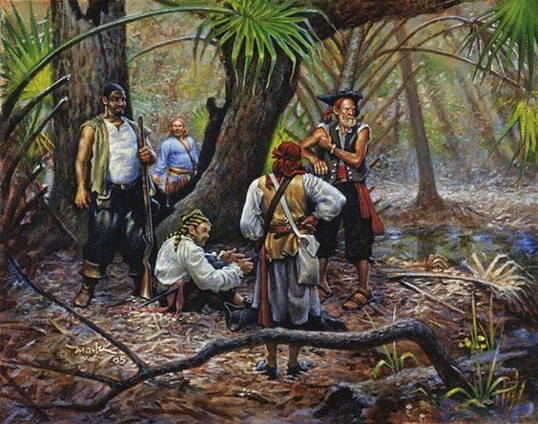
“ when they were introduced to that town, they had great revenge for their miseries with a large provision that they found placed on the fire of pots of pork, and chickens of the land, and many tamales of corn, bananas, and coyol wine in abundance, which the English had prepared for their expenses that day; but at the sound of our march, the English abandoned the houses “
The English fled by sea in three of their boats that had been anchored in the first harbour from where the Spaniards had launched their first attack in July of 1650. The Indians disillusioned with the aftermath of the battle and being hunted like wild game for nine days with their English protectors were rounded up without resistance in the centre of the village ; man , woman and child and led through the jungle to where the Spanish ships were at anchor. The Spanish forces set fire to all of the houses and crops.
From the village of Roatá on the island of Ruatan in the Bay of Honduras , the last known indigenous Bay Islanders were taken and relocated on the Rio Dulce at the port at Santo Tomas de Castillo which is known as Matias de Galvez today part of the Puerto Barrios container port.
Postscript
Sadly the only accounts of this Battle are from the Spanish colonial side ( Herrera y Juarros , both official Colonial chroniclers ). The most detailed account that I have studied and have used as a guide to walk the suggested battlefield is that of Captain Don Francisco Fuentes y Guzman as related to his son years after the battle occurred ( Recordacion Florida 2 ) . There are other manuscripts that allude to this event but with not much detail ( EG Squier ,1852 ). We know little from the side of the English apart from brief notes that exist in manuscripts from Captain Nathaniel Butler’s diary. Butler ( or Boteler ) was William Claiborne’s cousin and with the help of Samuel Axe ( a builder later turned Pirate ) built the Puritan settlement on Providencia and later on Ruatan. Butler and Axe later joined William Jackson’s Buccaneer fleet that terrorized the Honduran mainland in the 1640’s from Trujillo to Puerto Caballos.
Using the documented physical descriptions as a guide we know that the first battle , in July took place in the hills ( and swamp ) overlooking the harbour adjacent to the Indian village of Ruatá . This harbour is today known as Old Port Royal but was known as Puerto Barreros by the Spaniards in the 16th century due to the red clay cliffs that can be seen from miles offshore. Ruatá was located where Pulpit Rock is located today in the valley which lies to its south. Ruatá village covered an area of some 5 acres and crop fields ( corn and cassava ) were on the hills overlooking the valley. The second Battle , in August was launched from new Port Royal directly in front of Cay Comfort with the Spaniards following the valley due North to outflank the English.
There are wide furrows around the red hill in Old Port Royal but these cannot be confirmed as the remains of the trench since 400 years has now passed. The swamp that was the demise of Villalva’s forces in the first attack is now no more having been filled in back in the 1990’s by a developer.
ALL RIGHTS RESERVED – MATTHEW JOHN HARPER MARKHAM